The Case for Face-to-Face in the AI Era
Some of the biggest records of the 1960s weren't played by the bands on the cover.
Much of the Beach Boys' lush studio sound came from a loose crew of LA session musicians. The Byrds' "Mr. Tambourine Man"? Only Roger McGuinn played on the single. The rest of that backing track was hired hands. The Monkees' early hits? Same story.
They called that crew the Wrecking Crew. The records are still great.
I keep coming back to this, because we're having the same argument again, this time about AI, and we keep having it as if it's brand new.
Cuban's bet
Last summer, Mark Cuban made a prediction I haven't been able to shake.
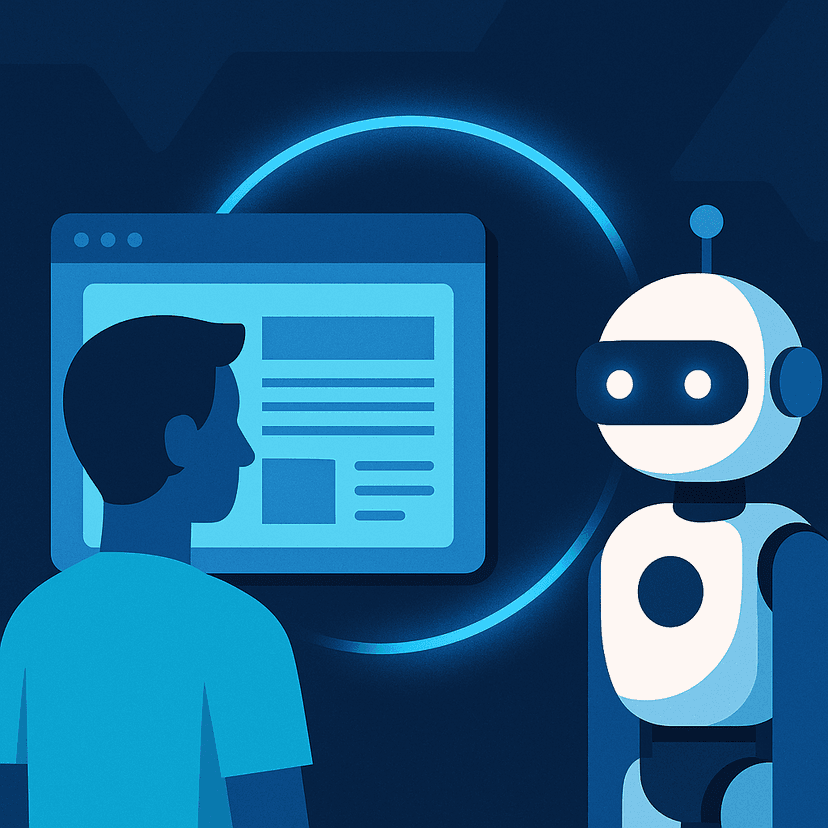
In a post on X on June 5, 2025, he wrote: "Within the next 3 years, there will be so much AI, in particular AI video, people won't know if what they see or hear is real. Which will lead to an explosion of f2f engagement, events and jobs. Those that were in the office will be in the field. Call it the Milli Vanilli Effect."
The bet, in plain terms: when anything on a screen could be fake, the things that can't be faked go up in value. A handshake, a room, a person across the table.
I think he's directionally right. Not gospel. It's a forecast, and forecasts miss. But the direction matches what I'm watching happen on my own machine.
Why I think he's right, from the inside
My angle on this isn't a pundit's. It's a builder's.
I build with AI every day. The site you're reading this on runs an autonomous agent system. Agents pick up tasks, write code, draft posts, and open pull requests against this repo. I review and redirect; they handle the grind. This post was drafted that way.
So I'm not theorizing about output getting cheap. I've watched it get cheap, on hardware I own.
What I love is solving problems. AI helps me get to the bottom of one fast and produce something I can actually apply. I do my own thinking and I use AI to produce. There's no reason you can't do both.
That's the part most takes miss. They treat it as a trade: either you think, or the machine does. It was never that.
The pendulum
This is where the music history stops being a fun fact and starts being the argument.
Outsourcing the craft is old. The Wrecking Crew did it in the '60s, and it wasn't fraud. The artists kept the vision, the songs, and the sound they were after. Someone else executed. Sound familiar?
Then the pendulum swung back. The Monkees, manufactured as a TV band with their early records cut by session pros, got tired of it. Michael Nesmith and Peter Tork fought their handlers for control and, in 1967, made Headquarters playing their own instruments. It went to number one. "Play it yourself" became the value.
The pendulum kept moving. Milli Vanilli is where it tips into something else: in 1989 the backing track skipped on stage, the lip-sync was exposed, and by 1990 they'd handed back a Grammy, still the only one ever revoked. Cuban reached for that name on purpose.
But notice the difference. The Wrecking Crew was disclosed craft. Milli Vanilli was hidden deception. Same outsourcing, opposite ethics. The line was never "did you get help." It's "did you hide it."
Then came grunge: the early-'90s craving for something raw and real after a decade of studio gloss. Cuban's "f2f explosion," basically, thirty years early. Every era of slickness breeds a hunger for the human.
And then even that got commodified. You can buy a Nirvana shirt on Amazon now. The rebellion becomes a costume.
Underneath all of it, one thing holds: the artists who last are the ones who used whatever technology existed without losing who they are.
Pearl Jam, U2, even Nirvana made records with modern studio tools, and they still sound unmistakably like themselves. That's my read, not a credit sheet. But you know it when you hear it. The tool was never the question. The question was whether you disappeared into it.
Don't outsource your thinking. Do outsource the grind.
Here's the trap.
Ask AI for an answer and it hands you the most-likely next thing: the statistical middle of everything it has read. Take that raw and ship it, and you sound exactly like everyone else who took it raw. The average. Everyone's sound.
Distinctiveness doesn't come from the model. It comes from you staying in the loop: shaping the work, pushing on it, throwing out the parts that sound like nobody, until it sounds like you.
That's the whole move:
- Do your own thinking.
- Use AI to produce.
- Keep your taste in every decision.
- Take the hours you get back and spend them on the thing the machine can't fake: being a real person in a real room.
AI amplifies whoever's holding it. It doesn't replace them. The differentiator was never the output. It's you.
There's a related thing I've noticed with the newer models: the good ones argue with me. I'll propose an approach and the model pushes back. It points out the case I didn't consider, the assumption that doesn't hold. The first time it really pushed, I was annoyed. Then I realized that is the collaboration working. A yes-man doesn't make you better. The friction is where the good work lives.
"Isn't an AI-drafted post about authenticity its own Milli Vanilli move?"
Fair question. Let me meet it straight.
No. And the difference is the whole point of the piece. The thinking, the point of view, the calls about what stays and what gets cut, the taste, and the fact that I'll talk to you face-to-face about any of it: that's mine. The implementation (turning it into clean prose, fast) is delegated. And disclosed. You're reading the disclosure right now.
That's the Wrecking Crew, not Milli Vanilli. Disclosed assistance isn't a lip-sync. The lip-sync was the hiding.
What this actually means for you
If output is getting cheap, here's where I'd put my energy.
Build a real body of work. Things you actually made and can talk about.
Do your own thinking, and use AI to produce. Both. Don't pick.
Keep your taste in the loop, so what you ship sounds like you and not like the average.
Be legibly yourself, online and especially off it.
And invest, on purpose, in the room: the interview, the meetup, the coffee that didn't have to happen. The part of you that doesn't commoditize is the part that shows up in person.
The grinder in the group project
Every group project has that one member who always shows up, takes the notes, and does the work without complaining. That's what AI is to me: the best teammate I've ever had at the grind.
But it doesn't have the idea. It doesn't have the taste. It doesn't walk into the room.
Use the tool fully. Just don't lose your sound.
Sources:
- Mark Cuban on X, June 5, 2025: the "Milli Vanilli Effect" prediction, quoted verbatim.
- The Byrds, Mr. Tambourine Man: only McGuinn played on the single; the Wrecking Crew cut the rest of the backing track.
- The Monkees, Headquarters (1967): the album where the band took over their own instruments.
- Milli Vanilli: the 1989 on-stage skip and the 1990 Grammy revocation.